
Why Small Businesses Are Choosing On-Premise AI Over Cloud
The infrastructure ROI: Predictable costs, no vendor lock-in, and scaling AI systems as your business grows
Small and medium businesses deploying Sovereign AI Infrastructure face a choice: pay unpredictable cloud costs that scale with usage, or invest in On-premise LLM deployment with fixed monthly pricing. The March 2026 White House AI Framework emphasized the need for Secure AI for Regulated Environments — but most SMEs need clarity on the business case, not just the compliance case.
On-site AI infrastructure isn't about rejecting cloud computing — it's about treating AI as a business utility you control, not a consumption service that controls your budget.
The Cloud AI Cost Problem
Cloud-based AI platforms charge per token, per API call, per inference. This creates three problems for small businesses:
1. Unpredictable Monthly Bills
Your January bill is $1,200. February is $4,800 because you onboarded new clients. March is $2,100 because usage dropped. April is $6,500 because you ran a marketing campaign and customer support inquiries spiked. You can't budget for this variability.
2. Vendor Lock-In Through Data Gravity
After six months, your AI system has processed thousands of customer interactions, built domain-specific knowledge, and integrated with your workflows. Switching vendors means losing this context and retraining from scratch. Cloud providers know this — it's why switching costs increase over time.
3. Feature Changes Without Your Input
Your cloud AI vendor deprecates the model version you've validated. Or they change pricing tiers. Or they add usage caps. You don't control the infrastructure, so you don't control these decisions. You adapt or migrate — neither option is cheap.
On-Premise AI as a Business Utility
Treating AI infrastructure like you treat electricity, internet, or phone service — fixed monthly cost, predictable capacity, control over upgrades — changes the economics.
What Changes With Fixed Infrastructure Costs:
Predictable budgeting
Your AI infrastructure costs $650/month for Tier 1 or $1,250/month for Tier 2. This doesn't change when you onboard new clients, run a marketing campaign, or have a spike in customer support inquiries. You budget for capacity, not consumption.
No vendor lock-in
Your models, your training data, your workflows — all stored on your infrastructure. If you want to test a new model, you run it in parallel. If you want to switch vendors, you migrate at your own pace. Your data isn't held hostage by a cloud provider.
Control over upgrades and changes
When a new model version is released, you decide when to upgrade. You run it in shadow mode first. You validate performance against your actual data. You don't wake up to a vendor email saying "we've updated your model and changed your pricing."
How SMEs Scale AI Infrastructure
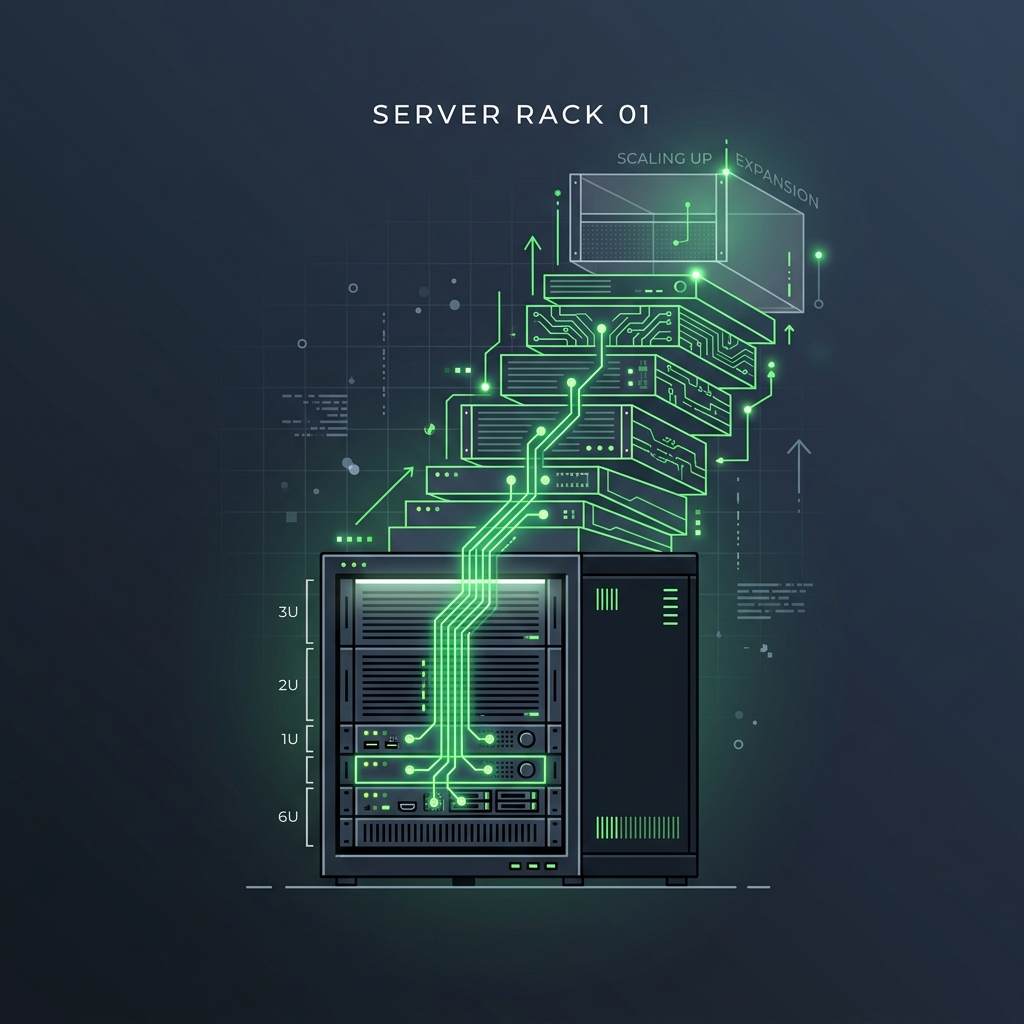
Small businesses don't need enterprise-scale AI infrastructure from day one. They need a clear path from foundation to acceleration — Tier 1 to Tier 2 — with predictable costs at each stage.
Tier 1: The Foundation — $650/month
- Up to 15 concurrent users
- Claude Sonnet 3.5 + GPT-4o models
- Full data sovereignty
- Chat, document analysis, email drafting
- Integration with existing tools
Who This Works For:
Professional services firms (5-15 people), boutique consultancies, specialized medical practices, small law firms, financial advisors. Your team needs AI-powered research, document drafting, and client communication — but you're not ready for custom development.
Tier 2: The Accelerator — $1,250/month
- Up to 30 concurrent users
- All Tier 1 features
- 8 hours monthly development time
- Custom workflows and automation
- Compliance dashboards
- Bias auditing pipelines
Who This Works For:
Growing SMEs (15-30 people) that need AI embedded in compliance, client onboarding, risk assessment, or regulatory reporting. The 8 hours of monthly development time is for building custom tools that cloud platforms don't offer.
The Tier 1 to Tier 2 Transition
Most SMEs start with Tier 1 and upgrade to Tier 2 when they encounter one of these trigger points:
Trigger 1: Compliance Requirements
Your business is subject to HIPAA, SEC oversight, or federal AI compliance frameworks. You need custom bias monitoring, demographic stratification dashboards, or audit trail generation. Cloud platforms can't provide this without exposing your data to third parties.
Tier 2 includes 8 hours of monthly development time specifically for compliance workflows. This is enough to build HHS Section 1557 bias dashboards, SEC model lineage documentation, or NIST AI RMF 1.1 compliance logging.
Trigger 2: Custom Workflows
You need AI integrated with your specific business processes — automated contract review, client risk assessment, treatment plan generation, portfolio rebalancing. These aren't features cloud platforms offer. They're workflows you design for your business.
Tier 2's monthly development time lets you build these workflows without hiring a full-time AI engineer. You define the process, the developer implements it, and it runs on your infrastructure.
Trigger 3: Team Growth
You've grown from 12 people to 25 people. Tier 1 supports 15 concurrent users — you're hitting that ceiling during peak hours. Tier 2 supports 30 concurrent users and costs $600/month more. The math is straightforward.
The ROI Calculation SMEs Actually Care About
ROI for on-premise AI infrastructure isn't measured in abstract "productivity gains" — it's measured in specific cost avoidance and capability unlocking.
Cost Avoidance:
- No per-token charges — unlimited usage within your tier's capacity. Use AI for every client interaction, every document draft, every email response without watching a usage meter.
- No overage fees — your monthly cost is fixed. You don't get surprise bills when usage spikes.
- No migration costs — your data stays on your infrastructure. Switching models or vendors doesn't require data migration or retraining.
Capability Unlocking:
- Compliance workflows cloud platforms can't provide — bias monitoring, demographic stratification, model lineage documentation. These aren't optional for regulated businesses.
- Custom integrations cloud platforms don't support — connecting AI to your practice management software, CRM, EHR, or compliance tools. Cloud platforms integrate with generic tools, not your specific systems.
- Competitive differentiation through AI you control — your models learn from your data, improve on your timelines, and serve your clients without vendor intermediation.
What SMEs Need to Know Now
The SMEs deploying on-premise AI infrastructure in 2026 are doing it for business reasons, not technical reasons. They want:
- Predictable monthly costs they can budget for
- No vendor lock-in or data hostage situations
- Control over when and how AI systems are updated
- The ability to build compliance workflows cloud platforms don't offer
- A clear scaling path from Tier 1 to Tier 2 as their team grows
Cloud AI makes sense for experimentation and one-off projects. On-premise AI makes sense when AI becomes a core business function you can't afford to have disrupted by vendor decisions.
Compare Tier 1 and Tier 2 Infrastructure
Pivital Systems builds sovereign AI infrastructure for SMEs that need predictable costs, data sovereignty, and clear scaling paths.
View Infrastructure Options →If your business is deploying AI for client communication, compliance workflows, or custom business processes, on-premise infrastructure isn't about rejecting the cloud — it's about treating AI as a utility you control, not a consumption service that controls your budget.